
Pressure gauge sitting below 1 bar, or dropping every few days no matter how often you top it up? That is rarely a stable system, and topping up indefinitely will eventually destroy your boiler. We diagnose the loss, fix it at source, and repressurise correctly.
A healthy sealed system in a typical London property should sit between 1.0 and 1.5 bar cold, rising to roughly 1.8 to 2.2 bar at full temperature. When pressure falls below 1 bar the boiler locks out, displaying a low-pressure code such as Vaillant F22, Worcester 1170, Ideal F1, or Baxi E118. The instinct is to grab the filling loop, but each top-up dilutes your Sentinel X100 inhibitor, accelerates internal corrosion, and masks the real fault. Pressure loss almost always has a cause: a perished expansion vessel diaphragm, a passing pressure relief valve discharging through the external overflow, a hairline radiator pinhole, or a failing auto air vent on the boiler itself.
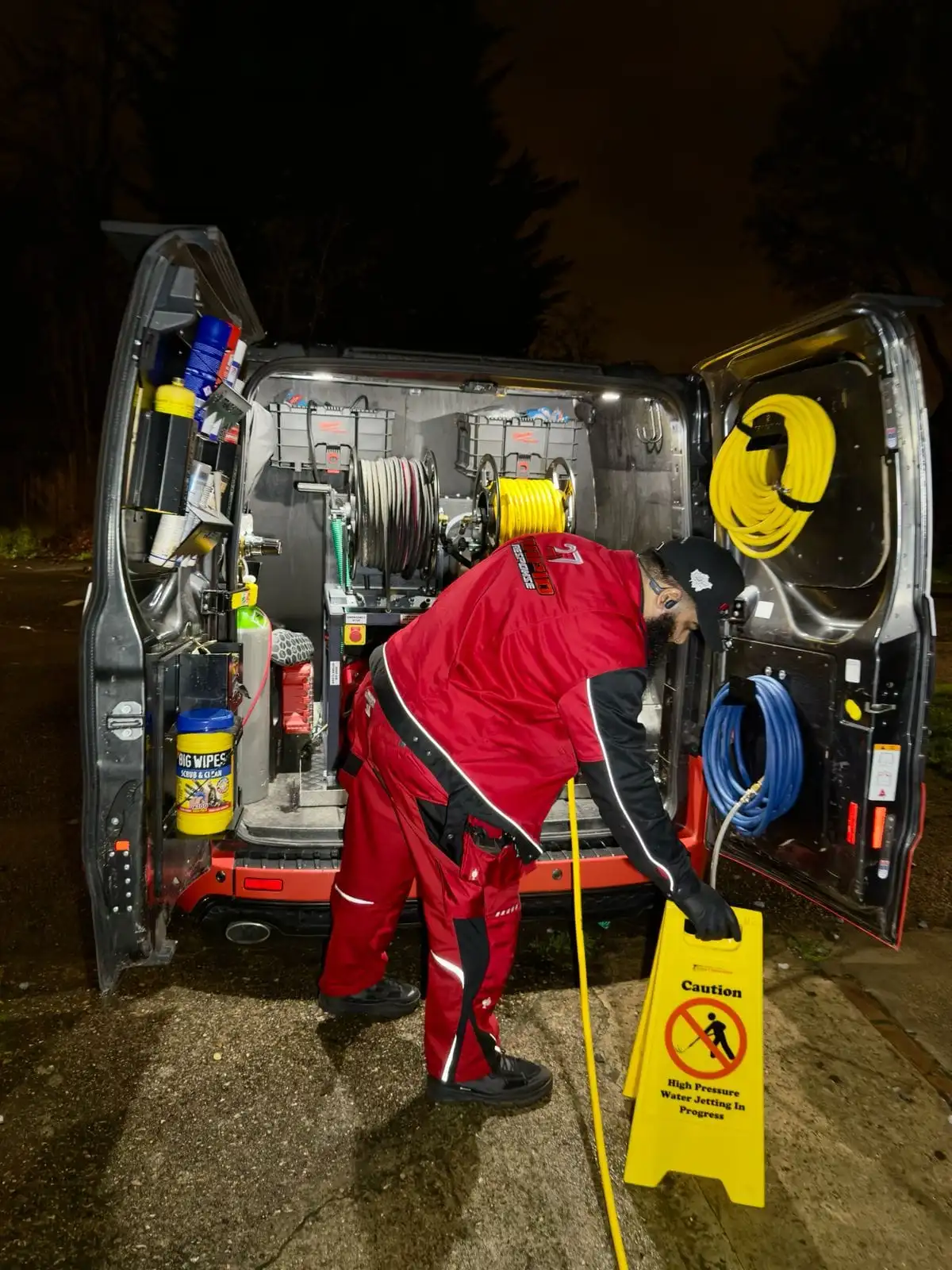
Our engineers attend with a calibrated test gauge, a Schrader pressure tester for the expansion vessel, and a thermal-imaging camera to trace heating leaks in floors and walls. We carry common internal vessels for Worcester Greenstar, Vaillant ecoTEC, and Ideal Logic, external Zilmet and Flamco add-on vessels, replacement Caleffi PRVs, and fresh Sentinel X100 to dose the system after refill. Once the cause is fixed, we vent every radiator, rebalance, and repressurise to the manufacturer's cold-fill specification.
Where this service applies
- Boiler locks out on a low-pressure error (Vaillant F22, Worcester 1170, Ideal F1, Baxi E118, Glow-worm F1)
- Gauge sits stubbornly below 1 bar even after topping up the filling loop
- Pressure climbs above 2.5 bar when hot and discharges through the external overflow pipe (failed expansion vessel)
- Damp patch on a ceiling under upstairs radiators, or a visible weep at a TRV or towel-rail bleed nipple
- You are refilling the system more than once a month and the inhibitor strip is showing yellow
- System recently drained for radiator removal or decorating and needs a controlled refill, vent, and balance
- Filling loop has been left permanently connected (a Water Regs breach we routinely correct)
- Pressure relief valve passing slowly and the discharge pipe is dripping in cold weather
How we deliver
No surprises, no upselling. The exact path every job follows.
- 1
Gauge and history check
We read both the on-boiler gauge and a calibrated test gauge, then ask how often you have been topping up and what the discharge pipe outside is doing. - 2
Leak survey, visible and hidden
Inspect every radiator valve, towel rail, airing-cupboard joint, and pump. Thermal-imaging camera used to find leaks below floors and behind walls. - 3
Expansion vessel pre-charge test
System depressurised, Schrader valve checked. Healthy domestic combi reads 0.75 to 1.0 bar on the air side. Re-charged or replaced as required. - 4
PRV and auto air vent inspection
Pressure-relief valve checked for passing. Auto air vent on the boiler header re-seated or replaced if it has stuck open. - 5
Repair quoted and carried out
Written quote presented before any chargeable parts work. Repair completed using OEM or equivalent parts. - 6
Controlled refill and inhibitor dose
Filling loop opened slowly to avoid air-locking the pump. Fresh Sentinel X100 dosed in line with BS 7593 to restore corrosion protection. - 7
Bleed, balance, and reset to cold-fill spec
Every radiator and towel rail vented, lockshield valves balanced, and final cold pressure set to manufacturer specification. - 8
FGA and sign-off
Flue-gas analyser run to confirm safe combustion after the system is back up to temperature, then written hand-over with pressure readings.