Boiler dead on the first hard frost of the year, with a gurgling noise from the kit before it locked out? Almost always a frozen condensate pipe. We attend across London the same day, thaw the line safely, and re-route or insulate the run so it does not happen again next winter.
Every modern condensing boiler produces a continuous stream of slightly acidic condensate (a by-product of recovering latent heat from the flue gases), typically 1 to 2 litres per hour at full output. That condensate runs from the boiler trap through a 22 mm or 32 mm waste pipe to an internal stack or, in older installations, out through an external wall to a soil stack, gully, or soakaway. When the external run freezes, the boiler trap fills, the safety circuit detects backed-up condensate, and the appliance locks out with codes such as Worcester EA, Vaillant F.28, Ideal F1 or F2, and Baxi E133. Reset attempts will not clear the fault until the ice is gone. If the condensate line is clear but the boiler still refuses to fire in cold weather, see our guide to boiler frost protection faults.
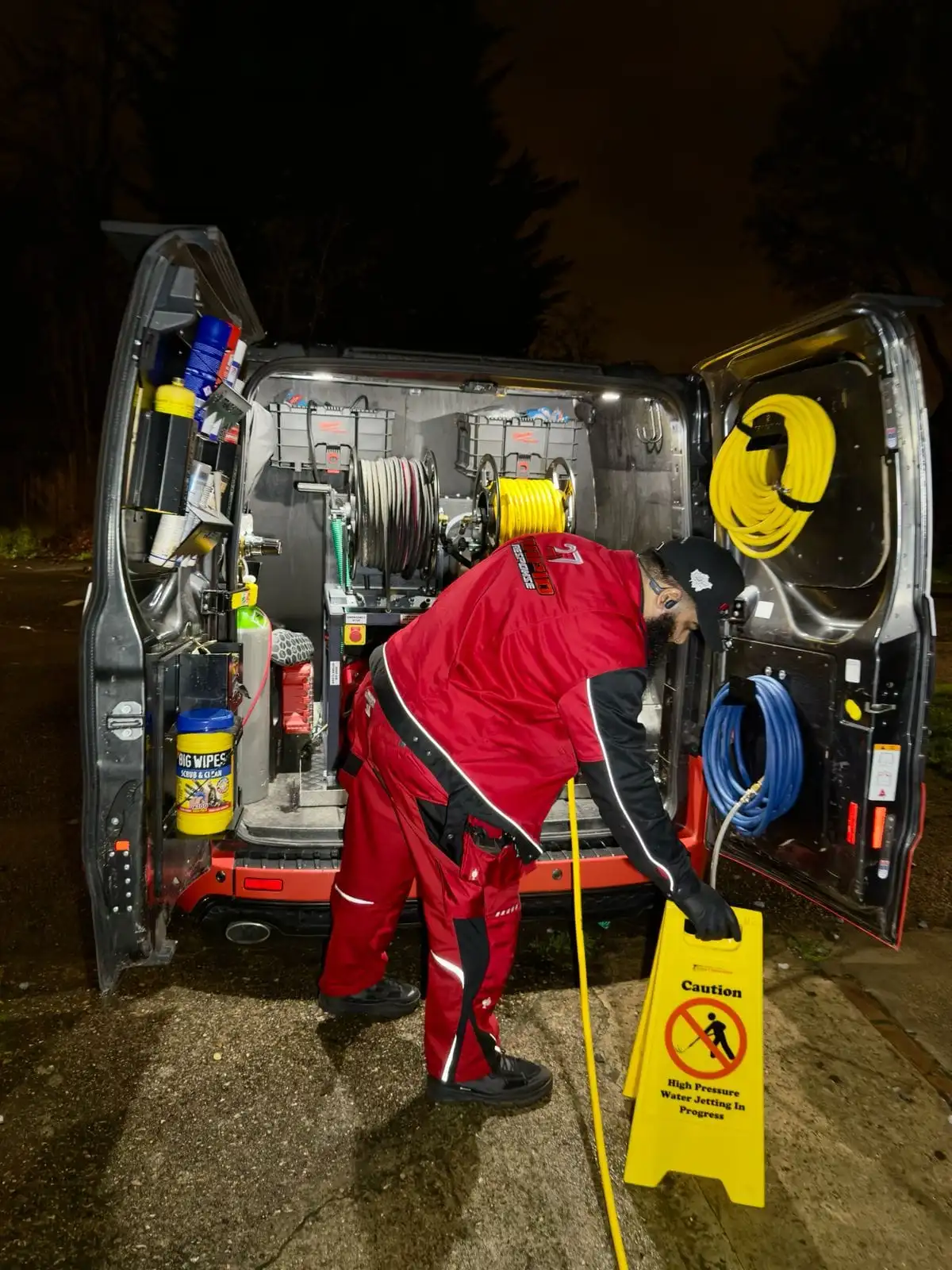
Our engineers attend with insulated hot-water flasks, foam pipe lagging in 19 mm and 25 mm thicknesses, weatherproof trace-heating tape, replacement 32 mm condensate trap pipework, and condensate pump kits for properties where gravity drainage is not practical. We thaw the existing pipe carefully (no boiling water on plastic), restart the boiler, then in line with the Boiler Plus and Part L guidance recommend an internal re-route or a properly lagged 32 mm external run so the same lockout does not happen on the next cold snap.
Where this service applies
- Boiler locked out overnight after the first hard frost of the season
- Gurgling noise from the boiler shortly before lockout (condensate backing up into the trap)
- Worcester EA, Vaillant F.28, Ideal F1 or F2, Baxi E133, Viessmann F4 on cold mornings only
- External condensate run in unlagged or under-sized 22 mm plastic pipe
- Pipe run terminating into an open gully on a north-facing or exposed wall
- Loft-routed condensate pipe in a poorly insulated loft
- Properties where the boiler has been moved or re-fitted with a temporary external run
- Repeat freeze incidents, candidates for a condensate pump or internal re-route
How we deliver
No surprises, no upselling. The exact path every job follows.
- 1
Phone-side triage
If we cannot attend immediately, we coach you through a safe self-thaw using a hot water bottle or warm cloth, never boiling water. Saves you a cold night. - 2
On-site freeze confirmation
Engineer locates the external pipe run, identifies the freeze point (usually at the elbow or termination), and confirms the boiler is otherwise healthy. - 3
Controlled thaw
Warm cloths and an insulated flask of hot water (never boiling) used along the run. Typical clearance in 10 to 25 minutes depending on length and freeze depth. - 4
Trap re-prime and boiler reset
Condensate trap inspected for grit and re-primed with fresh water before the lockout is cleared and the boiler returned to service. - 5
Permanent fix options
Three options presented: weatherproof lagging upgrade, increase to 32 mm pipe with a 3 degree minimum fall, or internal re-route to an existing waste stack with a Hepworth HepvO trap. - 6
Trace-heating where appropriate
For runs that cannot be brought inside, weatherproof self-regulating trace-heating tape fitted under closed-cell lagging. Powered from the boiler's permanent live. - 7
FGA and combustion check
A frozen condensate often hides a partially blocked flue or trap. We run a flue-gas analysis to confirm safe combustion before sign-off. - 8
Customer brief and notes
We talk you through what to do at the first sign of a freeze next year. Written job sheet emailed with photos and recommendations.