No hot water from a combi boiler that is otherwise running heating fine? The fault is almost always inside the appliance, the DHW plate heat exchanger, the diverter valve, or the flow switch. We carry the parts and the diagnostic kit to fix it the same visit.
A combi produces hot water on demand by sensing flow at the cold inlet (flow switch or turbine sensor), opening a diverter valve to route primary water through a secondary plate heat exchanger, and modulating the burner. When any of those three components fails the symptom is the same: heating still works, you turn the tap and get cold. A Worcester Greenstar Sensor F.6 often indicates a stuck diverter motor, a Vaillant ecoTEC F.27 a failed flame-sensing relay that won't allow DHW priority, an Ideal Logic L9 a furred-up secondary plate restricting flow.
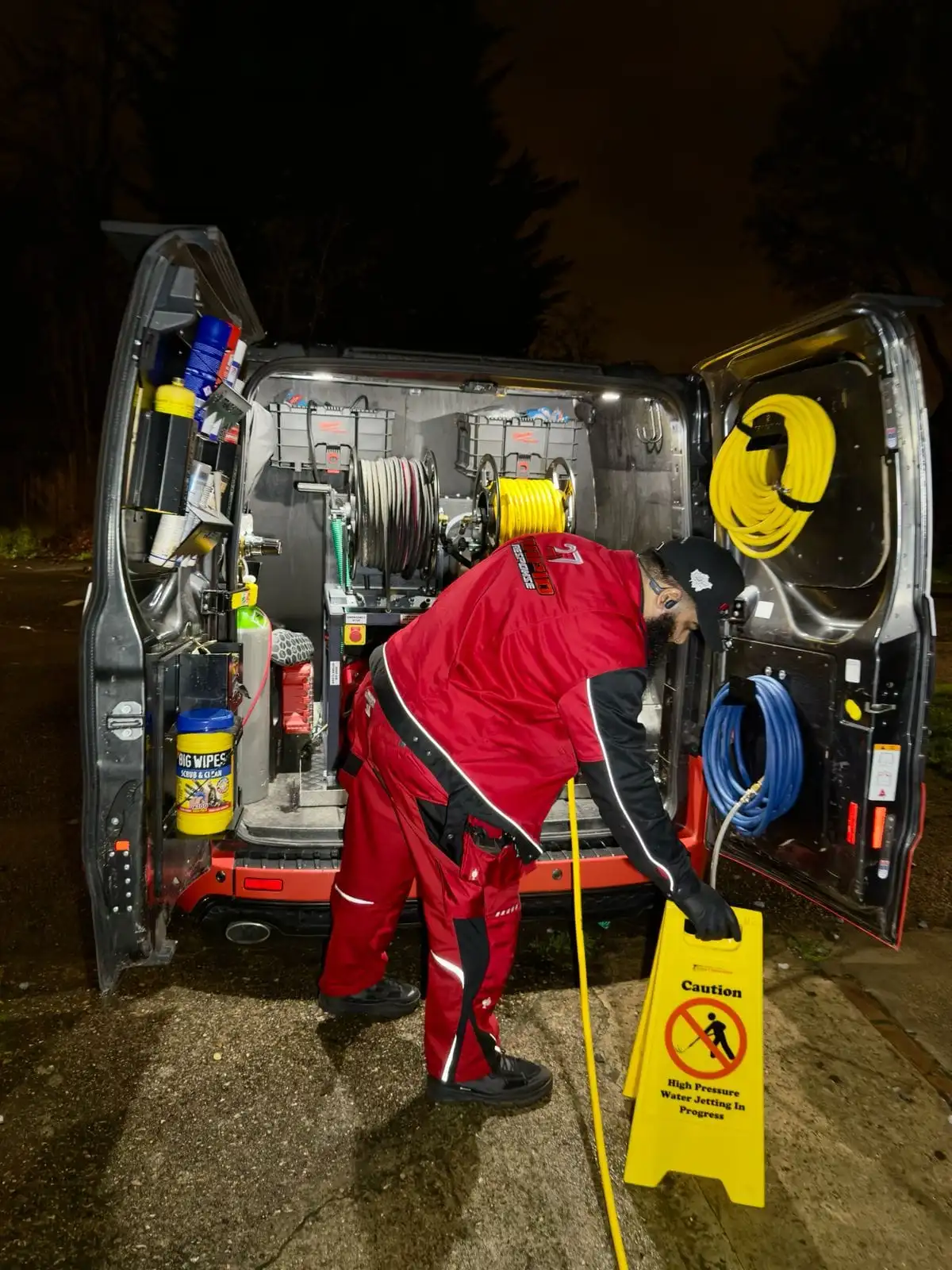
Our engineers carry plate heat exchangers, diverter valve assemblies, flow switches, turbine sensors, and descaling rigs for Worcester Greenstar, Vaillant ecoTEC, Ideal Logic, Baxi DuoTec, Viessmann Vitodens, and Glow-worm Energy combis. We confirm the failed component with a multimeter and live data, then quote in writing. Where the plate is heavily scaled, we offer a Kamco flush to restore performance. If your home has a hot water cylinder rather than a combi, see our guide to heating working but no hot water on cylinder systems.
Where this service applies
- Combi boiler with full heating but no hot water at any tap, bath, or shower
- Hot water runs lukewarm at the kitchen tap (typical sign of a scaled DHW plate heat exchanger)
- Tap runs hot for ten seconds then goes cold (failing flow switch or turbine sensor)
- Worcester Greenstar EA on DHW demand, Vaillant ecoTEC F.27 or F.62, Ideal Logic L9
- Diverter motor audibly cycling but no temperature rise at the tap (stuck mechanical diverter)
- Hot water only works at full flow, drops to cold at low flow (flow switch threshold drift)
- Hard-water London postcodes (E, EC, SE, SW) where DHW heat exchangers scale faster
- Boilers fitted without a scale reducer or Sentinel ProTec dose
How we deliver
No surprises, no upselling. The exact path every job follows.
- 1
Symptom and code capture
We confirm whether heating still works, what error codes are stored, and whether the issue affects every tap or just one. That alone narrows the cause by more than half. - 2
Cold inlet flow check
Bucket-test the cold supply to the boiler, typically 12 to 18 litres per minute. Low mains flow can mimic a flow-switch fault. - 3
Flow switch and turbine test
Multimeter on the flow-switch terminals during a DHW demand. Verifies whether the boiler PCB is even seeing a tap-on signal. - 4
Diverter valve operation
Listen and feel for the diverter motor stroking. If the motor moves but no temperature swap occurs, the mechanical diverter is stuck and the assembly is replaced. - 5
Plate heat exchanger inspection
Inlet and outlet differential temperatures compared. A scaled DHW plate often shows 30 to 40 C drop across it rather than the expected 5 to 10 C. - 6
Repair, descale, or replace
Diverter and flow switch typically replaced in 1 to 2 hours from van stock. A heavily scaled plate is descaled with Kamco rig or swapped for an OEM replacement. - 7
Inhibitor and protection
Sentinel X100 inhibitor topped up to BS 7593 dose. Sentinel ProTec scale inhibitor offered in hard-water postcodes to protect the new parts. - 8
FGA and DHW sign-off
Tap-side temperature checked at full flow and trickle. Flue gas analysis recorded. Written hand-over emailed.