
Foul-water overflow and surcharge is one of the more distressing emergencies a London household can face: WCs that will not flush away, foul liquid rising through ground-floor showers, gulleys spilling sewage onto the patio, and inspection chamber covers lifting under hydraulic pressure. The cause is almost always one of three things, a blockage in the private lateral between your property and the public sewer, a fat-and-grease obstruction downstream at a shared chamber serving several properties, or a hydraulic overload where Thames Water mains capacity has been exceeded by storm rainfall in a combined sewer area. Older Victorian terraces in inner London still drain through shared interceptor chambers and rear access culverts that compound the problem.
We respond to foul-water overflow calls across the capital with full jetting, vacuum, and CCTV capability on the first van. Standard kit is a 4,000 PSI high-pressure jetter with FOG-cutting and root-clearance nozzles, Wincan and Pearpoint push-rod CCTV for post-clearance verification, and the documentation required to engage Thames Water at the boundary box if the failure proves to be on the public side. Every job is worked to BS EN 752 for drain and sewer systems outside buildings, and where the surcharge has caused contamination indoors we coordinate the deep clean and antimicrobial treatment under the same call-out so the property is safe to reoccupy without a second visit.
Where this service applies
- Ground-floor WCs and showers backing up with foul liquid
- External inspection chambers visibly full or with covers lifting
- Foul gulleys surcharging through the grating into the garden
- Shared rear-access drainage runs serving multiple terraced properties
- Fat, oil, and grease blockages in combined kitchen wastes
- Wet-wipe and sanitary product accumulations in older 100mm clay laterals
- Mains-water intrusion through a cross-connection or failed combined-sewer junction
- Repeat surcharge after every heavy storm, suggesting Thames Water capacity issues
- Insurance claims for contamination, flooring damage, or escape of waste water
How we deliver
No surprises, no upselling. The exact path every job follows.
- 1
Rapid containment
PPE on, affected rooms cordoned off, taps and WCs taken out of use, and any active overflow channelled away from doorways and electrical sockets before any diagnostic work begins. - 2
Chamber lift and flow check
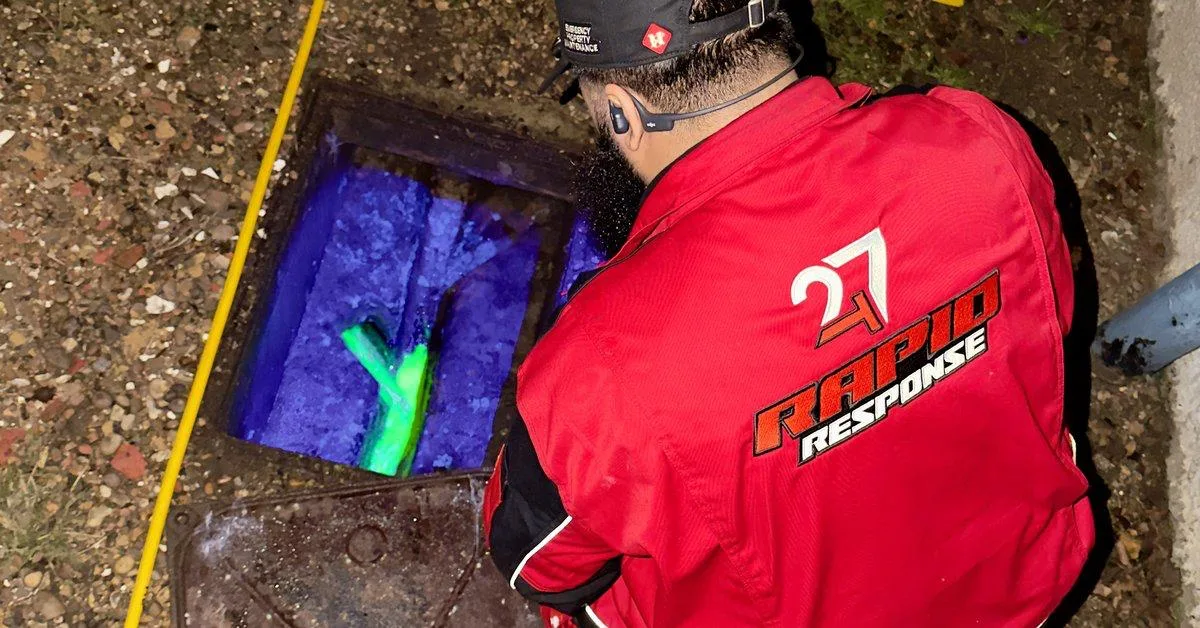
Every accessible inspection chamber lifted, water level and flow direction recorded. This single check usually pinpoints whether the blockage is on your private lateral or downstream of the Thames Water boundary box. - 3
High-pressure jetting
4,000 PSI jetter deployed with the appropriate nozzle (rotary FOG cutter for grease, chain-flail for root mass, flusher for wet wipes), pressure escalated progressively to clear the obstruction. - 4
CCTV verification
Wincan or Pearpoint push-rod camera run through the cleared line, defects WRc-coded, and recommended permanent fixes priced separately (relining, junction repair, or root-source removal). - 5
Thames Water escalation, where needed
If the failure is on the public side of the boundary box, we report it to Thames Water on your behalf with the CCTV evidence, chamber location, and asset reference, then keep you updated until they attend. - 6
Antimicrobial clean down
All contaminated surfaces washed with virucidal disinfectant to BS EN 14476, soft furnishings and contaminated flooring photographed and itemised for the insurance claim. - 7
Anti-flood device recommendation
For properties with repeat surcharge history we specify and price a BS EN 13564 anti-flood device or non-return valve at the boundary so the next storm does not push waste back inside. - 8
Written report and claim pack
CCTV footage, photographs, WRc defect list, and an insurance-grade report covering cause, scope, and reinstatement, ready to hand to your insurer or loss adjuster.