

Kitchen sinks block from the inside out. Cooking fats, oils, and greases (the trade calls them FOGs) leave the pan as warm liquid and cool in the 40mm waste run, where they coat the inside of the pipe and trap food particles, coffee grounds, and rice. Over weeks the cross-section narrows from 40mm to 20mm, then to 10mm, and finally the sink stops draining altogether. Caustic shop-bought drain unblockers eat at the grease but also eat at the pipe seals, and on older lead or chromed-brass waste runs they accelerate corrosion. The right fix is mechanical removal, not chemical attack. Bathroom wastes block differently, mostly with hair and soap residue, so see our guide to blocked bath and shower drains if that is where the problem is.
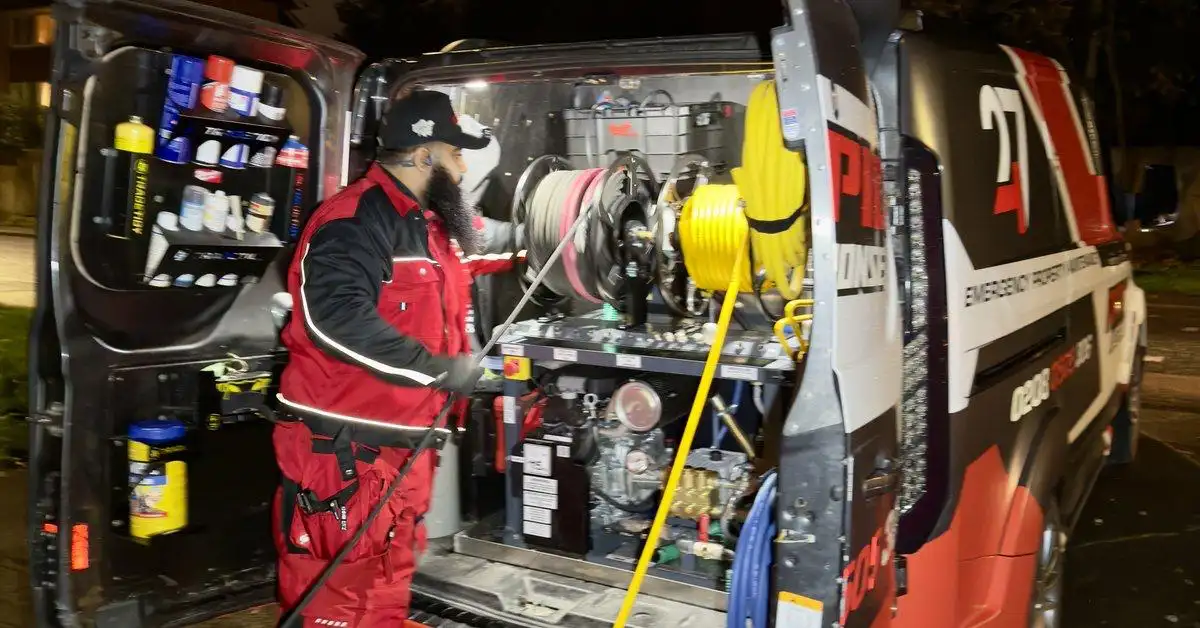
We carry both light-trade and heavy-trade kit on every kitchen visit. A 9-metre 6mm spring rod clears most domestic 40mm and 50mm wastes, and where the blockage is further down the run we step up to a 15-metre electric drain auger or, on commercial units and stubborn fat plugs, a high-pressure jet unit running at 4,000 PSI with the appropriate small-bore lance. After clearance, the trap is stripped, cleaned, and the run flushed with hot water to verify a clean full-bore flow. Where the blockage points to a deeper soil-stack issue we can run a camera survey on the same visit, see our drainage services.
Where this service applies
- Kitchen sink that drains slowly or gurgles, classic early-stage fat and food-waste build-up
- Sink fully blocked, water standing in the bowl and refusing to drain after a hot-water flush
- Double-bowl sink where one side drains and the other backs up, blockage downstream of the tee
- Foul smell rising from the plughole, breakdown of trapped organic matter past the trap
- Waste pipe leaking under the sink, often a symptom of pressure build-up upstream of a blockage
- Failed shop-bought unblocker that has cleared the symptom for 24 hours and re-blocked
- Commercial kitchen waste runs serving prep sinks and pot wash stations, jetting required
- Waste disposal unit blocked or seized, mechanical clear of the chamber and chamber outlet
- Recurring blockages pointing to a fall-gradient fault or a deeper stack issue, camera survey recommended
How we deliver
No surprises, no upselling. The exact path every job follows.
- 1
Initial assessment and floor protection
We bag and sheet the floor under the sink, isolate any waste disposal at the spur, and bail standing water from the bowl into a 25-litre bucket so the trap can be opened without flooding the cupboard. - 2
Trap stripped and cleaned
The U-bend or bottle trap is removed, the food and fat content emptied, and the trap inspected for cracking, perished seals, or back-nut wear. We replace washers and o-rings as standard, not as an extra. - 3
Manual rodding of the waste run
A 6mm spring rod or 9mm hand auger is run from the trap connection through the 40mm waste to the soil stack tee, working through any soft fat plug and recovering the bulk on retraction. - 4
Power tool clearance if required
Where hand rodding does not clear the run we step up to a 15-metre electric drain auger, or on heavy commercial fat blockages a 4,000 PSI jet running a 1/4-inch warthog lance through the waste to the stack. - 5
Trap reassembled and tested
Trap rebuilt with new washers, tightened to hand-plus-quarter, and the sink filled to overflow level and released. We watch the run from above and below to confirm full-bore flow with no weep at the connections. - 6
Hot flush and bio-enzyme dose
Run is flushed with two pans of near-boiling water to lift any residual film, then dosed with an enzymatic drain treatment to digest the trace fat coating the pipe wall over the following days. - 7
Prevention advice and survey option
If the blockage looks recurrent or the waste shows a poor fall, we recommend a follow-up CCTV survey on the soil stack. Otherwise we leave you with the usual no-FOG-down-the-sink advice and a clean cupboard.